Sep 7, 2026Manufacturing & Quality
Quality Control Process in Knitwear Manufacturing
Learn the quality control process in knitwear manufacturing, including incoming inspection, in-line checks, post-wash evaluation, and final inspection before shipment.
Introduction
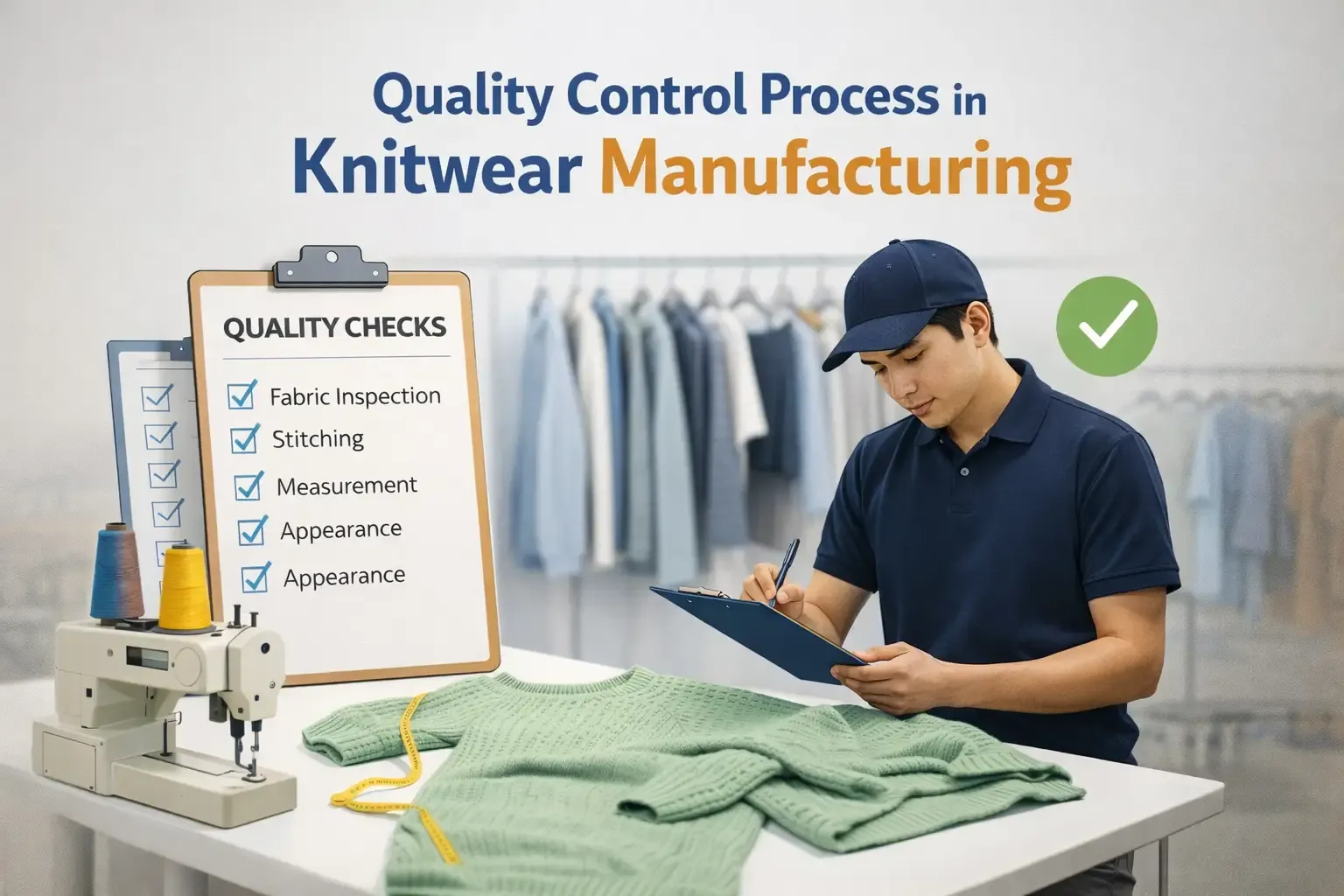
Quality control (QC) is essential in knitwear manufacturing to ensure consistent sizing, construction, and durability. Proper QC prevents returns, defects, and brand reputation issues. This guide explains the step-by-step QC process in a professional knitwear factory.
1. Incoming Material Inspection
QC starts with raw materials:
- Fabric weight and GSM verification
- Fiber composition check
- Color and shade consistency
- Shrinkage rate testing
- Surface defect inspection
Any material failing inspection is rejected to prevent production issues.
2. In-Process Quality Control
QC during production ensures early detection of defects:
- Stitching density and seam strength
- Measurement accuracy according to spec sheets
- Correct rib attachment on cuffs, collars, hems
- Detection of dropped stitches or misaligned seams
In-line inspections reduce rework and waste.
3. Pre-Finishing Checks
Before washing or finishing:
- Ensure construction matches approved samples
- Verify embroidery, printing, or applique placements
- Confirm trims, labels, and buttons are attached correctly
This stage prevents post-finishing corrections.
4. Post-Wash & Finish QC
If garments are garment-dyed, brushed, or washed:
- Recheck shrinkage and size measurements
- Evaluate fabric hand feel and softness
- Inspect color consistency and fastness
- Check for pilling or surface damage
This ensures final product meets brand expectations.
5. Final Inspection Before Packing
Before bulk shipment:
- Random AQL inspection (Acceptable Quality Level)
- Re-measure dimensions and check tolerances
- Evaluate overall appearance
- Confirm packaging, labeling, and folding standards
Only approved items proceed to shipment.
6. Documentation & Reporting
QC includes:
- Inspection reports per batch
- Non-conformance logs
- Communication with production teams for corrections
- Approval for shipment
Proper documentation ensures traceability and continuous improvement.
Conclusion
A structured quality control process in knitwear manufacturing guarantees that garments meet brand standards for fit, construction, and durability. Investing in QC not only reduces defects and returns but also builds trust with clients and ensures a consistent product experience.
Buyer Inputs and Approval Gates
Confirm buyer inputs — tech pack or specification, size chart, color standard, and quantity — and name the approval gates: sample approval, PP sample approval, and bulk production approval. Agree tolerances and inspection points, and define what happens if a batch fails acceptance.
Related Products
Work with SML INTIMATE: we apply structured quality control across fabric inspection, in-line checks, and final inspection for knitwear programs. Discuss your quality requirements via our contact page.