Sep 28, 2026Manufacturing & Quality
Rib Fabric Selection for Premium Hoodies: What Brands Should Know
Guide on selecting rib fabric for premium hoodies, covering weight, composition, elasticity, and color matching to ensure durability, comfort, and long-term garment performance.
Author & Source
Author: Connor Ma, International Trade Analyst with 10+ years of experience in textile sourcing, apparel manufacturing, and garment production strategy
Reviewed by: SML Intimate Textile & Manufacturing Team
Published by: SML Intimate Manufacturing Insights
Introduction
Rib fabric plays a critical role in the overall quality and durability of premium hoodies. While most brands focus on the body fabric’s weight and softness, the ribbing used for cuffs, collars, and hems directly influences shape retention, comfort, and long-term performance.
This guide explains how to select the right rib fabric for high-end hoodie production, ensuring both visual appeal and functional durability.
1. What Is Rib Fabric?
Rib fabric is a specialized knit structure created by alternating knit and purl stitches, which results in vertical ribs. It offers natural elasticity, without relying heavily on elastane, making it ideal for garment areas that require stretch and shape retention.
Common applications of rib fabric in hoodies:
- Sleeve cuffs
- Bottom hem bands
- Neckline collars
Rib fabric’s natural elasticity makes it a crucial component in premium hoodies, especially for creating a snug yet comfortable fit at critical points like the sleeves and neck.
2. Rib Weight & Thickness
For premium hoodies, selecting the right rib weight is essential for maintaining consistency and garment structure.
Recommendations:
- 300–400gsm hoodie: Medium to heavyweight rib
- 400gsm+ hoodie: Thicker, high-density rib
Using a lightweight rib with heavyweight body fabric may result in:
- Sagging cuffs
- Poor recovery
- Uneven garment silhouette
When choosing rib fabric, ensure that the rib weight complements the body fabric for long-term durability and a refined appearance.
3. Composition Options
Different rib fabric compositions offer varying performance characteristics, which should be considered based on the desired hoodie style and function.
100% Cotton Rib
- Pros: Natural feel, breathable, soft touch
- Cons: Slightly less recovery than blends
- Best for: Minimalist styles with a focus on comfort
Cotton-Spandex Rib
- Pros: Excellent elasticity, strong shape retention
- Best for: Activewear or streetwear collections that require flexibility and durability
Blended ribs, combining cotton with synthetic fibers, generally improve durability and washing performance, making them a great choice for high-use garments like hoodies.
4. Recovery & Stretch Testing
A high-quality rib fabric should possess the ability to stretch and return to its original shape, maintaining its elasticity over time and after multiple washes.
Manufacturers typically test rib performance through:
- Stretch recovery tests: Ensuring the rib fabric stretches and recovers efficiently after wear
- Wash shrinkage evaluation: Assessing the fabric’s ability to maintain its shape after washing
- Repeated wear simulation: Testing the rib fabric’s performance under continuous stress
These tests ensure that the rib fabric will maintain its shape and function throughout the life of the hoodie.
5. Color Matching & Dyeing
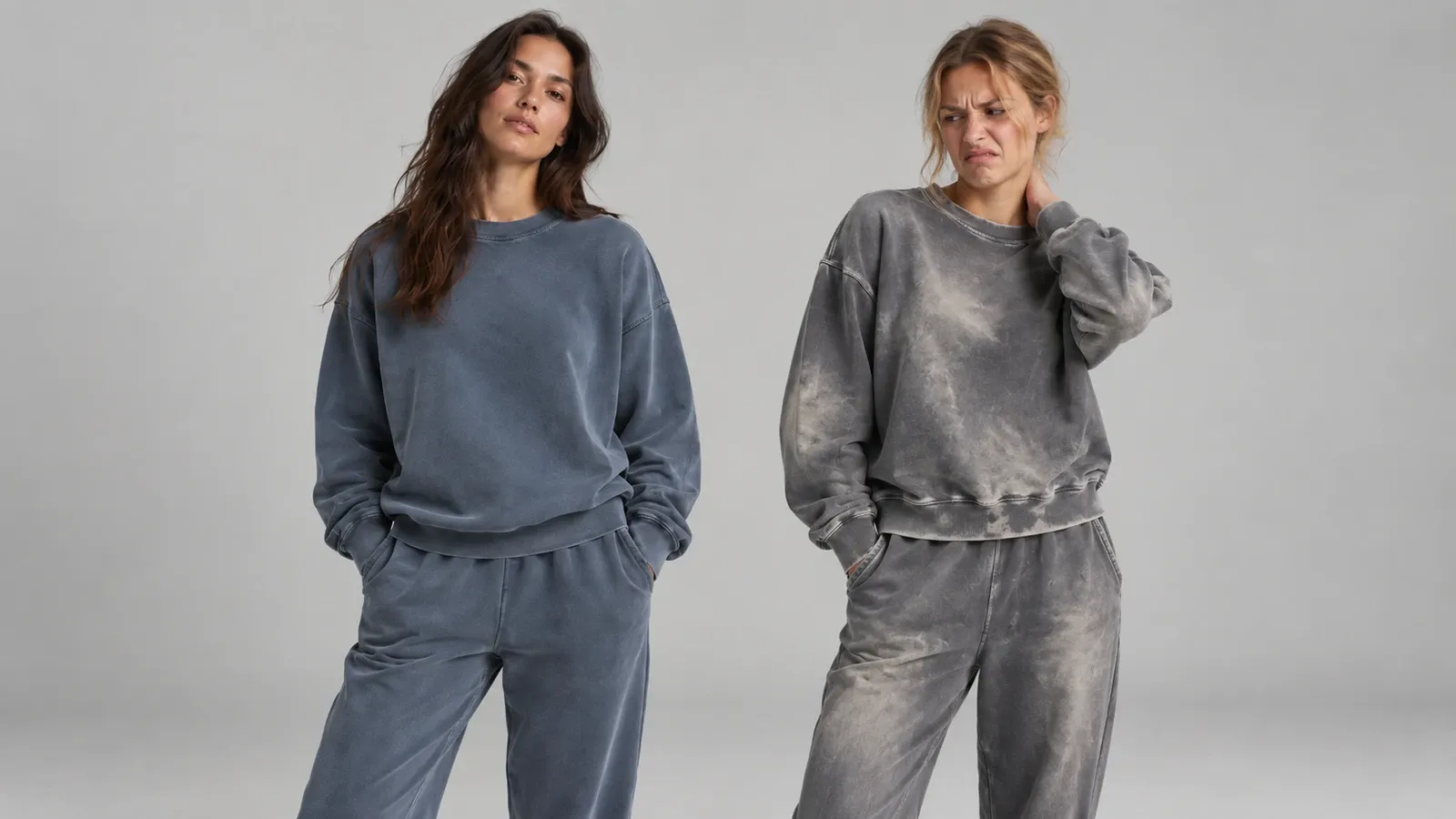
For garment-dyed hoodies, rib fabric compatibility with body fabric is crucial to avoid color mismatches and distortions after washing.
Key factors to consider:
- Dye absorption consistency: Ensuring that both body fabric and ribbing absorb dye similarly
- Shrinkage alignment: Ensuring that the rib fabric and body fabric shrink at the same rate during washing
- Color fastness: Verifying that the rib maintains its color and doesn’t fade or distort
Choosing the right rib fabric for garment-dyeing applications helps maintain the hoodie’s visual appeal after multiple washes.
Conclusion
Rib fabric selection is a fundamental component in the development of premium hoodies. The right rib fabric ensures shape retention, comfort, and durability, and plays a key role in maintaining the overall quality of the garment.
When selecting ribbing, brands should carefully evaluate:
- Rib weight and thickness
- Fabric composition
- Elasticity and recovery
- Dye compatibility
By making these considerations during the sampling phase, brands can ensure consistent quality and long-lasting performance in their hoodie collections.
Get a Quote
Looking for high-quality rib fabric for your premium hoodie collection?
Contact us today to work with an experienced custom hoodie manufacturer and ensure your fabric selections align with your brand’s needs.
References
- McKinsey & Company. The State of Fashion 2025
- Textile Exchange. Preferred Fiber & Materials Report 2025
- SML Intimate Internal Textile Sourcing Data, 2025
- World Bank. Global Apparel Manufacturing Insights 2025
Buyer Checklist
Before committing a hoodie program, confirm: GSM, fabric composition, fleece or French terry construction, rib composition, shrinkage, fit, sample approval, wash test, finishing, labels, and packaging. These inputs make the sample and bulk specification concrete rather than assumed.
Rib Fabric on Our Floor
We match rib cuffs and hems to your body fabric for weight, elasticity and color. Send your body-fabric specification and we will confirm the rib construction in your quote — hoodie programs start around 300 pieces per style per color.