Sep 17, 2026Sourcing Guide
Factory vs Trading Company: How to Tell the Difference (and Why It Costs You)
Is your "manufacturer" really a middleman? Five practical signs — from GSM answers to machine questions to price math — and what working factory-direct actually saves you.
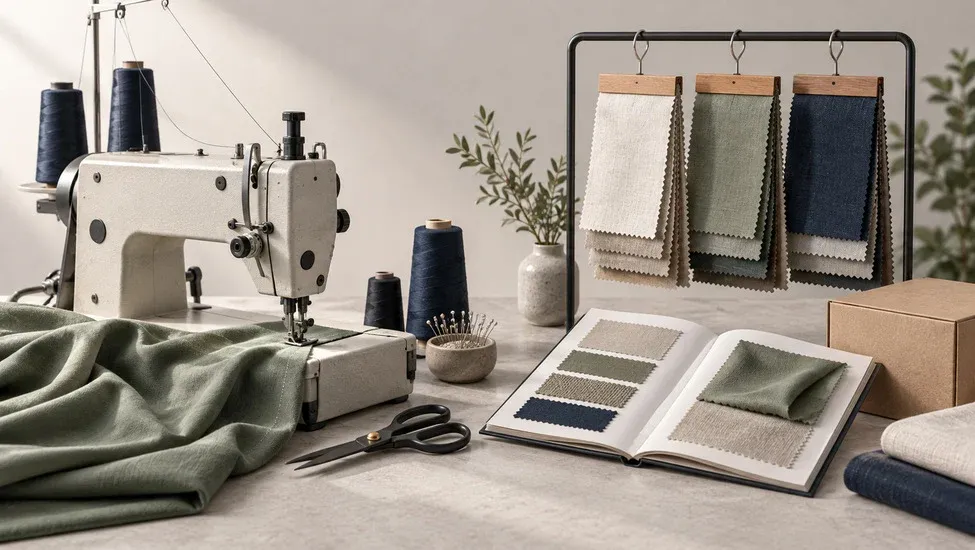
Half the companies online calling themselves "manufacturer" are traders. Sometimes that is fine. But when you think you are buying factory-direct and you are not, you pay the difference in price — and in speed when something goes wrong. Here is how to tell, in five practical signs, no documents required.
Sign 1: GSM and fabric questions — answered in minutes or in a day?
Ask: "What GSM do you keep in stock for nylon-spandex jersey?" A factory answers from the shelf: numbers, right now. A trader must go ask a factory — expect a silent evening, then a vague reply.
Sign 2: Ask about machines and processes
"What machine type do your flatlock seams run on? Can you do coverstitch hems?" Factory people talk shop naturally — it is their daily work. Traders give marketing answers or disappear and come back with "yes we can do".
Sign 3: Do the price math
Ask for quotes at two quantities, for example 50 and 500 pieces. A factory's per-piece price drops visibly with quantity, because setup cost spreads out. A trader's price barely moves — because they are adding a margin on top of someone else's quote.
Sign 4: Who talks when there is a problem?
On a production question — "my stitch is skipping, can you adjust?" — a factory puts you near the person at the machine. A trader relays messages between you and the actual factory, and each hop loses a day and some meaning.
Sign 5: Video walk-through, unscripted
Request a live video walk where you choose where to point: cutting table, sewing lines, fabric racks. Factories have these rooms. Traders have offices, or borrow a factory for ten minutes — so they will steer the camera and keep it short.
Is a trading company always bad?
No. Good traders add value in language, consolidation across suppliers, and small-batch convenience. But you should choose that knowingly and price it consciously — not discover it after you have paid factory prices to a middleman.
What factory-direct actually saves you
- Price: no margin layer in the middle
- Speed: changes and re-orders are decided on the floor, not relayed 【内链流程文】
- Accountability: the people who made the garment fix the garment — no one to hide behind
- MOQ flexibility: factories control their own floor, so low minimums are a decision, not a negotiation.
We are a factory — knitting, cutting and sewing on our own floor, with in-stock fabrics that let us run from 50 pieces. Come test us with the five signs above: video walk-through, machine questions, quantity math — Request a Quote.