Sep 21, 2026Manufacturing & Quality
Sampling Process Explained: From Design to Fit Approval in Apparel Manufacturing
Sampling process explained from design review to PP sample approval, helping brands improve fit accuracy, reduce errors, control costs, and ensure smooth garment production.
Author & Source
Author: Connor Ma, International Trade Analyst with 10+ years of experience in apparel development and knitwear production
Reviewed by: SML Intimate Sampling & Technical Team
Published by: SML Intimate Manufacturing Insights
Introduction
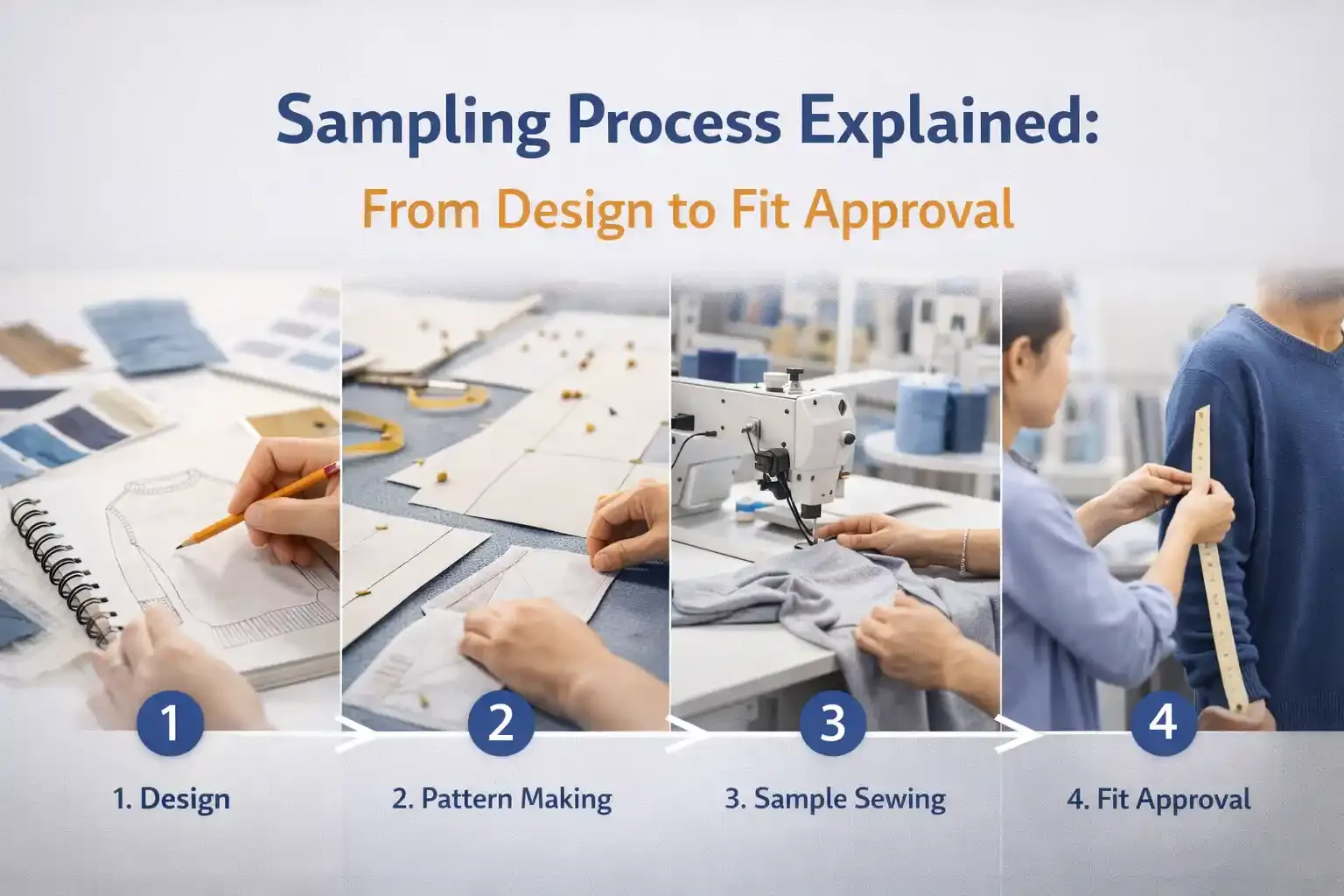
The sampling process is one of the most critical stages in garment manufacturing. It transforms a design concept into a physical product while verifying fit, fabric performance, and construction accuracy before bulk production.
Based on real factory workflows, a structured sampling process helps brands reduce costly mistakes, improve product consistency, and shorten production timelines.
This guide explains each stage of sampling, from technical evaluation to final fit approval.
Stage 1: Design Review & Technical Evaluation
Before sampling begins, manufacturers conduct a full technical review.
Key elements reviewed:
- Tech pack details
- Fabric specifications
- Construction requirements
- Measurement charts
At this stage, experienced factories may provide feedback on:
- Fabric feasibility and availability
- MOQ and cost implications
- Potential shrinkage or fit risks
Clear communication early on reduces unnecessary revisions later. Working with a professional OEM apparel manufacturer ensures more accurate evaluation and faster development.
Stage 2: Pattern Making
Pattern development is the foundation of the sampling process.
For knit garments, pattern makers must consider:
- Fabric stretch ratio
- Shrinkage allowance
- Intended fit (oversized, boxy, slim)
A well-developed pattern determines garment balance, proportions, and overall silhouette.
Stage 3: Sample Cutting & Sewing
Once the pattern is finalized:
- Fabric is cut according to sample size
- Garments are constructed following tech pack instructions
- Rib, trims, and stitching details are applied
This stage produces the first prototype sample, which is used for initial evaluation.
Stage 4: First Fit Evaluation
The brand evaluates the first sample based on:
- Overall silhouette
- Shoulder alignment
- Sleeve proportions
- Body length
- Comfort and drape
Common issues identified:
- Chest width too tight or loose
- Sleeve length imbalance
- Rib tension inconsistencies
In most cases, at least one revision is required. An experienced custom clothing manufacturer can identify and correct these issues efficiently.
Stage 5: Revised Sample (Second Fit)
Based on feedback from the first fitting:
- Patterns are adjusted
- Measurements are corrected
- Construction details are refined
The second sample should incorporate all revisions and move closer to final approval.
Stage 6: Pre-Production Sample (PP Sample)
Once fit and construction are approved, the PP sample is developed.
Key characteristics:
- Uses bulk production fabric
- Includes final trims, labels, and accessories
- Follows confirmed construction standards
This sample represents the exact reference for mass production.
Bulk production should never begin without PP sample approval, as it serves as the quality benchmark.
Want to see how we run this workflow for private label brands? Our sampling process page walks through it step by step.
Typical Sampling Timeline
Industry-wide, a knitwear sampling round usually takes 2–4 weeks. Our own sampling runs faster: 7–10 days from your design to a finished sample in hand.
Curious what that looks like in practice — including sample types, costs (US$50 per style, deducted from your first bulk order) and what we need from you? See our sampling process.
Why the Sampling Process Matters
A structured sampling process provides critical benefits:
- Prevents costly bulk production errors
- Ensures consistent sizing and fit
- Verifies fabric behavior after washing
- Aligns expectations between brand and manufacturer
Skipping or rushing this stage often results in quality issues, delays, and increased return rates.
Conclusion
The sampling process bridges the gap between design concept and bulk production. Brands that invest in proper fit approval and technical refinement achieve higher product quality and more predictable production outcomes.
Successful sampling depends on:
- Detailed tech packs
- Clear communication
- Systematic revisions
- Experienced manufacturing partners
Get a Quote
Looking to streamline your sampling process and reduce development risks?
Contact us today to work with a professional custom apparel manufacturer for sampling, fit development, and bulk production support.
Not sure what to ask before you pay? Start with sample costs, lead times and payment terms — we publish our real numbers.
References
- McKinsey & Company. The State of Fashion 2025
- Textile Exchange. Preferred Fiber & Materials Report 2025
- SML Intimate Internal Sampling Workflow Data, 2025
- World Bank. Global Apparel Manufacturing Insights 2025
Buyer Inputs and Approval Gates
Confirm buyer inputs — tech pack or specification, size chart, color standard, and quantity — and name the approval gates: sample approval, PP sample approval, and bulk production approval. Agree tolerances and inspection points, and define what happens if a batch fails acceptance.