Sep 7, 2026Manufacturing & Quality
Garment Dye vs Pigment Dye: What’s the Difference for Premium Apparel Brands?
Compare garment dye vs pigment dye for premium apparel, including color effect, softness, durability, and cost to help brands choose the right finishing method.
Author & Source
Author: Connor Ma, International Trade Analyst with 10+ years of experience in garment manufacturing and textile finishing
Reviewed by: SML Intimate Fabric Development Team
Published by: SML Intimate Manufacturing Insights
Introduction
For premium T-shirts, hoodies, and vintage-inspired loungewear, dyeing technique can define both product aesthetics and perceived value.
Two of the most widely used finishing methods are garment dyeing and pigment dyeing. While both can create washed-down, vintage looks, they differ significantly in color penetration, texture, durability, production complexity, and cost.
Based on real manufacturing applications, this guide explains the difference between garment dye and pigment dye, and how brands can choose the right process for their collection.
1. What Is Garment Dye?
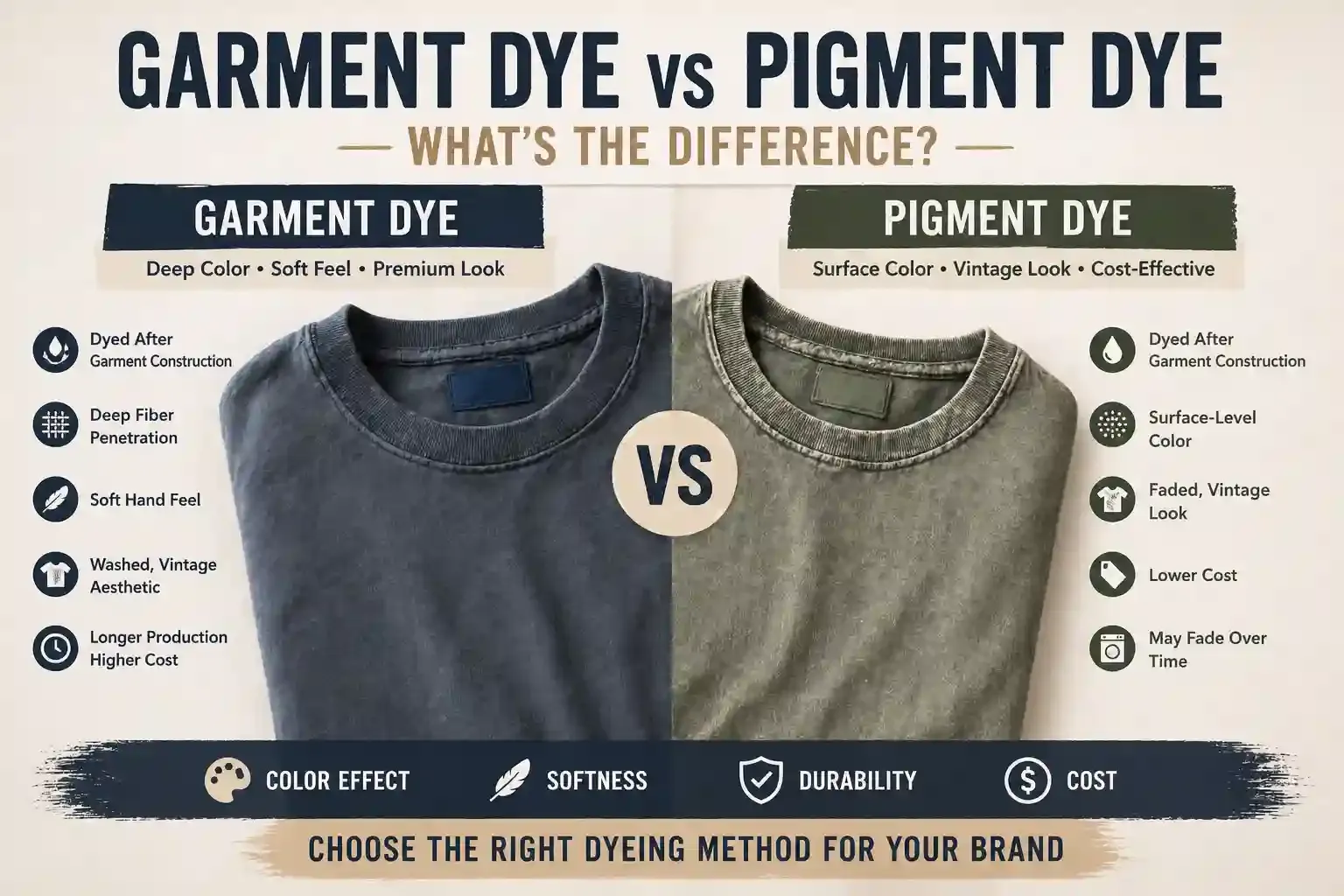
Garment dyeing means the garment is fully cut and sewn first, then dyed as a finished piece.
Unlike fabric dyeing, this process colors the entire finished garment, often producing subtle shade variation and a softer washed appearance.
Key Characteristics
- Deep fiber color penetration
- Soft hand feel
- Washed, premium vintage aesthetic
- Slight tonal variation piece to piece
- Higher water and energy usage
Advantages
- Premium, broken-in softness
- Richer and more dimensional color effect
- Popular for luxury basics and minimalist streetwear
- Natural fading improves character over time
Considerations
- Longer production lead times
- Higher processing cost
- Shrinkage risk if not pre-tested properly
Experienced custom garment manufacturers typically perform shrinkage and colorfastness testing before bulk production.
2. What Is Pigment Dye?
Pigment dyeing applies color mainly to the surface of the fabric using pigments and binders rather than deeply penetrating fibers.
This creates a worn, faded appearance associated with vintage and heritage-inspired products.
Key Characteristics
- Surface-level color application
- Washed-out vintage look
- Slightly dry hand feel initially
- Characteristic fading and aging over time
Advantages
- Distinctive worn-in aesthetic
- Lower cost than garment dye
- Ideal for graphic-heavy streetwear products
- Great for achieving sun-faded effects
Considerations
- Color may fade faster with repeated washing
- Surface cracking can occur over time
- Requires wash testing to control appearance consistency
Pigment dye is widely used in fashion collections where “imperfect vintage” is part of the design language.
3. Garment Dye vs Pigment Dye: Key Differences
Aspect | Garment Dye | Pigment Dye |
|---|---|---|
Dye Process | Full garment dyed | Surface pigment application |
Color Depth | Deep penetration | Surface-level color |
Hand Feel | Soft and broken-in | Slightly dry at first |
Cost | Higher | Moderate |
Fade Effect | Smooth natural fade | Vintage irregular fade |
Best For | Premium basics | Vintage streetwear |
4. Which Dyeing Method Should Brands Choose?
Choose Garment Dye If You Want:
- Premium minimalist collections
- Luxury heavyweight tees or hoodies
- Soft hand feel and rich color depth
- Elevated washed basics
Choose Pigment Dye If You Want:
- Vintage streetwear aesthetics
- Faded, worn-in visual effects
- Lower-cost special wash programs
- Graphic-driven collections
5. Important Testing Before Bulk Production
Regardless of method, professional manufacturers should test:
- Wash shrinkage
- Color fastness
- Crocking resistance
- Shade consistency
- Fabric compatibility by GSM
These controls are essential when working with a reliable premium apparel manufacturer.
Conclusion
Garment dye and pigment dye achieve very different results.
Garment dye offers:
- Deeper color
- Softer hand feel
- Premium elevated aesthetics
Pigment dye offers:
- Distinct vintage character
- Lower costs
- Strong visual identity for streetwear
The right choice depends on your brand positioning, budget, and target consumer.
For premium private label development, choosing the correct dyeing process can significantly affect both product perception and long-term customer satisfaction.
Get a Quote
Need help selecting the right wash or dye process for your collection?
Contact us to work with an experienced custom hoodie manufacturer and develop premium garment-dyed or pigment-dyed products.
References
- Textile Exchange. Preferred Fiber & Materials Report 2025
- McKinsey & Company. The State of Fashion 2025
- Cotton Incorporated. Dyeing & Finishing Performance Standards
- SML Intimate Internal Wash Development Data, 2025
Fabric Decision Criteria
Confirm fabric composition, GSM, hand feel, stretch and recovery, shrinkage, and any applicable test method before bulk. Record the tolerance and who approves it, and require a sample on the same fabric as bulk.