Jun 26, 2026Manufacturing & Quality
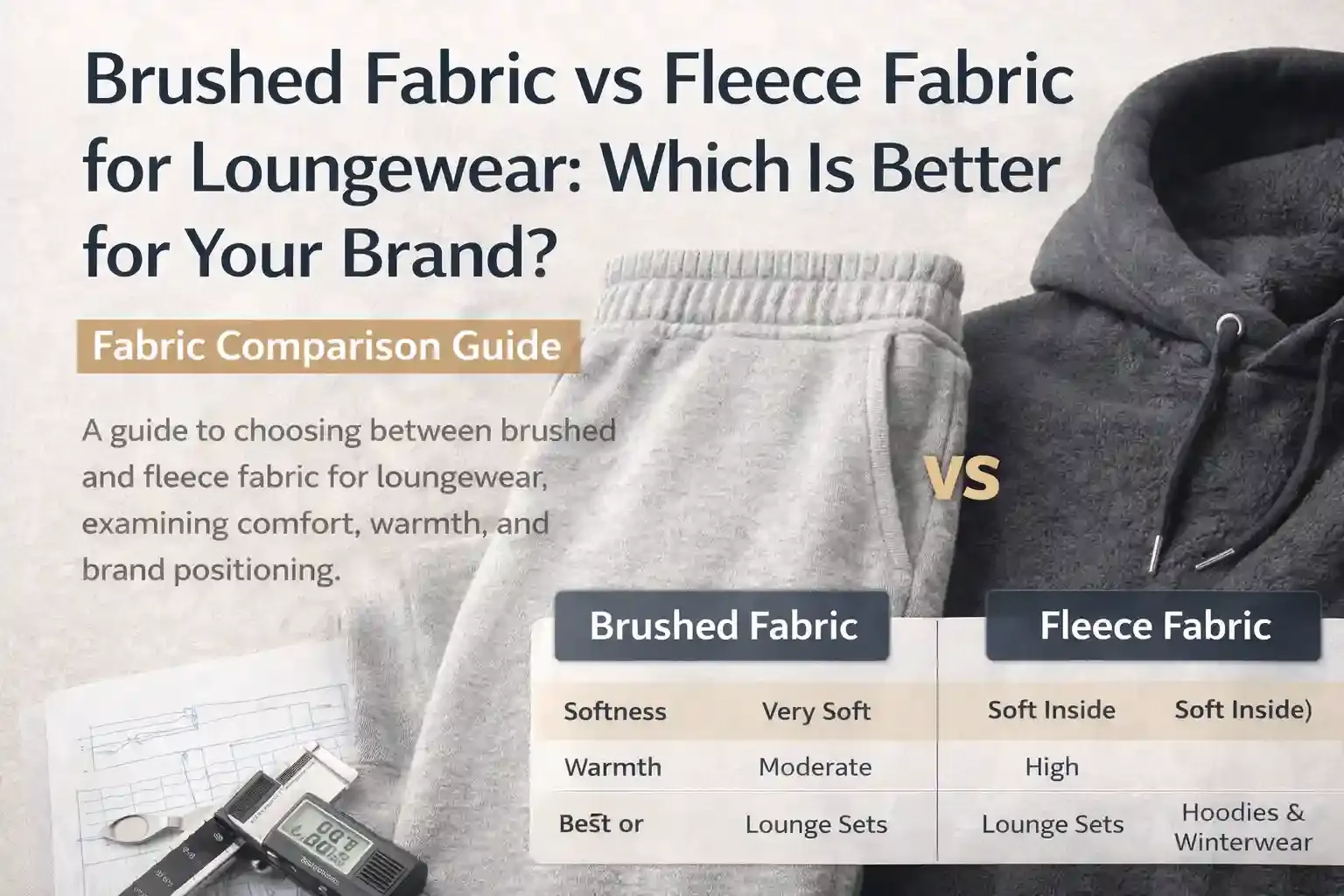
Brushed Fabric vs Fleece Fabric for Loungewear: Which Is Better for Your Brand?
Comparison of brushed vs fleece fabric for loungewear, covering softness, warmth, weight, and use cases to help brands choose the right material for their collection.
Author & Source
Author: Connor Ma, International Trade Analyst with 10+ years of experience in knitwear sourcing and apparel manufacturing
Reviewed by: SML Intimate Fabric Development Team
Published by: SML Intimate Manufacturing Insights
Introduction
When developing premium loungewear, fabric selection directly affects comfort, warmth, durability, and overall brand positioning.
Brushed fabric and fleece fabric are two of the most commonly used materials in loungewear and hoodie production. While they may appear similar, their structure, performance, and cost implications differ significantly.
Based on real product development experience, this guide explains how to choose the right fabric for your private label collection.
1. What Is Brushed Fabric?
Brushed fabric is created by mechanically brushing the surface of the fabric to raise fine fibers, resulting in a soft and smooth texture.
Key Characteristics
- Extremely soft hand feel
- Lightweight to mid-weight options
- Smooth outer surface
- Suitable for year-round wear
Advantages
- Premium comfort and skin-friendly texture
- Ideal for elevated casualwear and lounge sets
- Creates a refined, soft-touch brand positioning
Considerations
- Less insulation compared to fleece
- Lower-quality yarn may lead to pilling
Brushed fabrics are commonly used by brands focusing on comfort-driven, premium everyday wear.
2. What Is Fleece Fabric?
Fleece fabric is typically a knit fabric with a brushed or looped interior designed to trap heat and provide insulation.
Key Characteristics
- Mid to heavyweight (usually 280–400gsm+)
- Strong heat retention
- More structured drape
- Widely used in hoodies and winter loungewear
Advantages
- Excellent warmth and insulation
- Durable for repeated wear
- Supports oversized and structured silhouettes
Considerations
- Heavier feel compared to brushed fabrics
- Higher fabric consumption increases cost
- May be too warm for mild climates
Fleece is the preferred choice for cold-weather collections and heavyweight streetwear.
3. Performance Comparison
Feature | Brushed Fabric | Fleece Fabric |
|---|---|---|
Weight | Light–Mid | Mid–Heavy |
Warmth | Moderate | High |
Softness | Very soft | Soft (inside) |
Structure | Flexible | More structured |
Best Use | Lounge sets | Hoodies & winterwear |
4. How to Choose for Your Brand
Choose Brushed Fabric If:
- Your brand focuses on softness and comfort
- You target indoor or transitional wear
- You want a lightweight premium feel
Choose Fleece Fabric If:
- You need strong insulation
- Your target market includes colder regions
- You are developing heavyweight hoodies or joggers
Technical Recommendation
Before bulk production, always test:
- GSM (fabric weight)
- Shrinkage rate
- Pilling resistance
Working with a professional custom loungewear manufacturer ensures these tests are conducted properly during sampling.
Conclusion
Brushed fabric emphasizes softness and everyday comfort, while fleece fabric focuses on warmth, structure, and durability.
The right choice depends on:
- Climate
- Target market
- Product positioning
Brands that align fabric selection with their product strategy can significantly improve customer satisfaction and reduce returns.
Get a Quote
Not sure which fabric is best for your collection?
Contact us today to work with an experienced custom apparel manufacturer for fabric sourcing and product development.
References
- Textile Exchange. Preferred Fiber & Materials Market Report 2025
- McKinsey & Company. The State of Fashion 2025
- SML Intimate Internal Fabric Testing Data, 2025
- World Bank. Global Apparel Manufacturing Insights 2025