Jun 26, 2026Resources
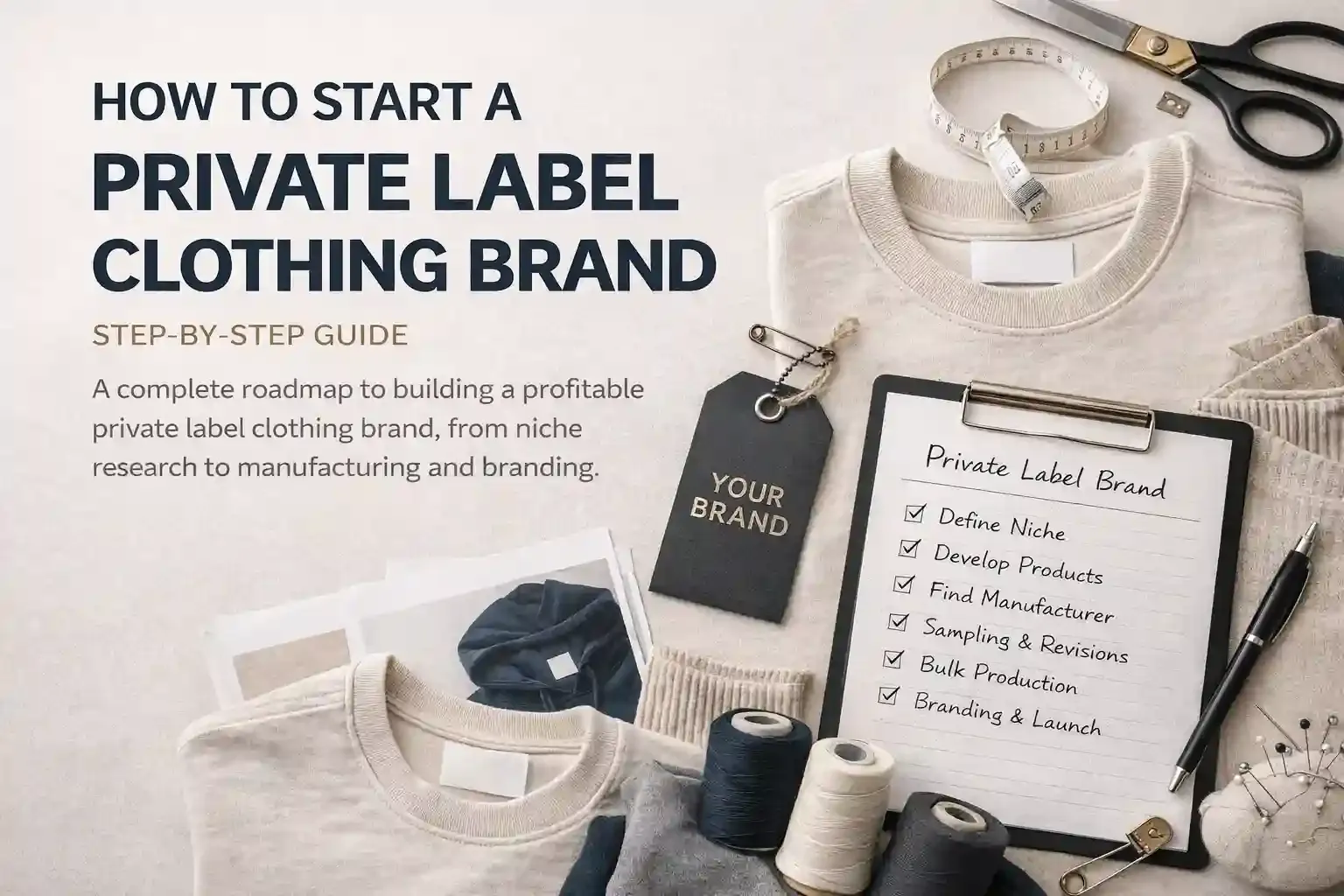
How to Start a Private Label Clothing Brand (Step-by-Step Guide)
Step-by-step guide to starting a private label clothing brand, covering niche definition, product development, manufacturer selection, sampling, and branding strategies.
Author & Source
Author: Connor Ma, International Trade Analyst with 10+ years of experience in global apparel manufacturing and private label branding
Reviewed by: SML Intimate Brand Development & Sourcing Team
Published by: SML Intimate Manufacturing Insights
Introduction
Starting a private label clothing brand requires careful planning and a clear strategy. From selecting your niche and product focus to choosing the right manufacturer and developing your brand, every decision you make impacts long-term success.
This step-by-step guide outlines how to build a profitable private label clothing brand, with emphasis on manufacturing strategy, quality control, and branding.
Step 1: Define Your Niche & Target Market
Before reaching out to manufacturers, it’s crucial to clearly define your target market and brand positioning. This early step ensures that your product development aligns with consumer demand.
Key considerations:
- Target audience: streetwear, premium basics, activewear, etc.
- Price positioning: budget, mid-range, or premium
- Core product focus: T-shirts, hoodies, sweatshirts, etc.
By narrowing down your niche, you simplify your development process and create a more defined brand identity. Having a clear niche helps differentiate your products from generic offerings and provides a foundation for your marketing.
Step 2: Develop Product Concepts
Once your niche is defined, the next step is to develop detailed product concepts. This includes fabric selection, fit, color palettes, and more.
Product concept planning includes:
- Fabric type and GSM (e.g., 240gsm cotton for T-shirts, 350gsm fleece for hoodies)
- Fit options: oversized, boxy, slim, etc.
- Color palette: aligning with your target audience’s preferences
- Size range: ensuring inclusivity for all body types
At this stage, you should prepare tech packs or provide reference samples to communicate your ideas clearly with manufacturers. Working with an experienced OEM apparel manufacturer helps refine these concepts before moving to the next stage.
Step 3: Find a Reliable Manufacturer
Choosing the right manufacturing partner is essential for quality, cost control, and reliability. Evaluate manufacturers based on their capabilities, quality standards, and willingness to collaborate.
Key factors to consider:
- Production capabilities: Can they handle your order size?
- Minimum Order Quantity (MOQ): Is it feasible for your startup?
- Sample development process: Are they open to iterations?
- Quality control standards: Do they meet industry standards?
Request samples before committing to bulk production. This allows you to assess the manufacturer's ability to meet your standards.
Step 4: Sampling & Revisions
The sampling phase is crucial in private label production. It’s where you test the product’s fit, fabric, and construction before committing to bulk production.
Key actions during sampling:
- Pattern development: Ensuring correct garment proportions and fit
- Fabric testing: Checking durability, elasticity, and shrinkage
- Fit adjustments: Tweaking the garment to match the desired silhouette
- Shrinkage and wash testing: Verifying how the fabric behaves post-wash
Most brands will need 1–3 rounds of revisions before final sample approval. This stage is vital to ensure that the final product meets your expectations.
Step 5: Bulk Production & Quality Control
Once the sample is approved, you can move forward with bulk production. However, it’s essential to maintain high-quality standards throughout the process.
Steps during bulk production:
- Confirm order quantity: Ensure the quantity meets your sales forecast
- Approve production timeline: Establish clear delivery dates
- Conduct in-line and final QC checks: Regular quality control ensures consistent quality and prevents costly errors
By investing time in quality control, you can avoid returns, maintain customer satisfaction, and build brand loyalty.
Step 6: Branding & Launch Strategy
Strong branding is key to standing out in a competitive market. Your branding should align with your target audience’s values and preferences.
Branding steps include:
- Custom labels and packaging: Create distinctive labels that reflect your brand’s identity
- Product photography: High-quality images for online and print marketing
- E-commerce platform setup: Ensuring your online store is user-friendly and optimized for sales
- Marketing and launch campaigns: Build excitement and awareness around your launch
By developing a cohesive branding strategy, you differentiate your private label products from generic wholesale items.
Conclusion
Starting a private label clothing brand involves strategic planning and careful collaboration with the right partners. By focusing on niche positioning, quality control, and professional sampling, you can build a sustainable and profitable clothing business.
Startups that take the time to develop clear product concepts, manage their MOQ, and prioritize quality at every stage of the process have a higher chance of success in a competitive market.
Get a Quote
Looking for a reliable manufacturer to help you start your private label clothing brand?
Contact us today to work with an experienced custom apparel manufacturer for your sampling, production, and branding needs.
References
- McKinsey & Company. The State of Fashion 2025
- Textile Exchange. Preferred Fiber & Materials Report 2025
- SML Intimate Internal Production & Sourcing Data, 2025
- World Bank. Global Apparel Manufacturing Insights 2025