Jun 26, 2026Industry Insights
The Impact of U.S. Tariffs on Chinese Apparel Export Prices: How Exporters Can Protect Profit Margins
How U.S. tariffs affect Chinese apparel export prices and strategies exporters use to adjust pricing, control costs, and protect profit margins.
U.S. tariffs on Chinese goods have dramatically reshaped the global apparel trade over the past several years. For Chinese apparel exporters, tariffs have not only increased costs but also forced companies to rethink pricing strategies, cost structures, and profit management. As of 2026, managing price adjustments while maintaining competitiveness has become one of the most important challenges for exporters targeting the U.S. market.
Understanding how tariffs affect production costs, how to pass costs through the supply chain, and how to maintain pricing flexibility is critical for protecting profit margins in an increasingly uncertain trade environment.
How Tariffs Affect Production Costs and Final Pricing
Tariffs directly increase the landed cost of apparel products entering the United States. Apparel already carries relatively high base import duties under the U.S. Harmonized Tariff Schedule, which are further increased by additional trade tariffs.
For example:
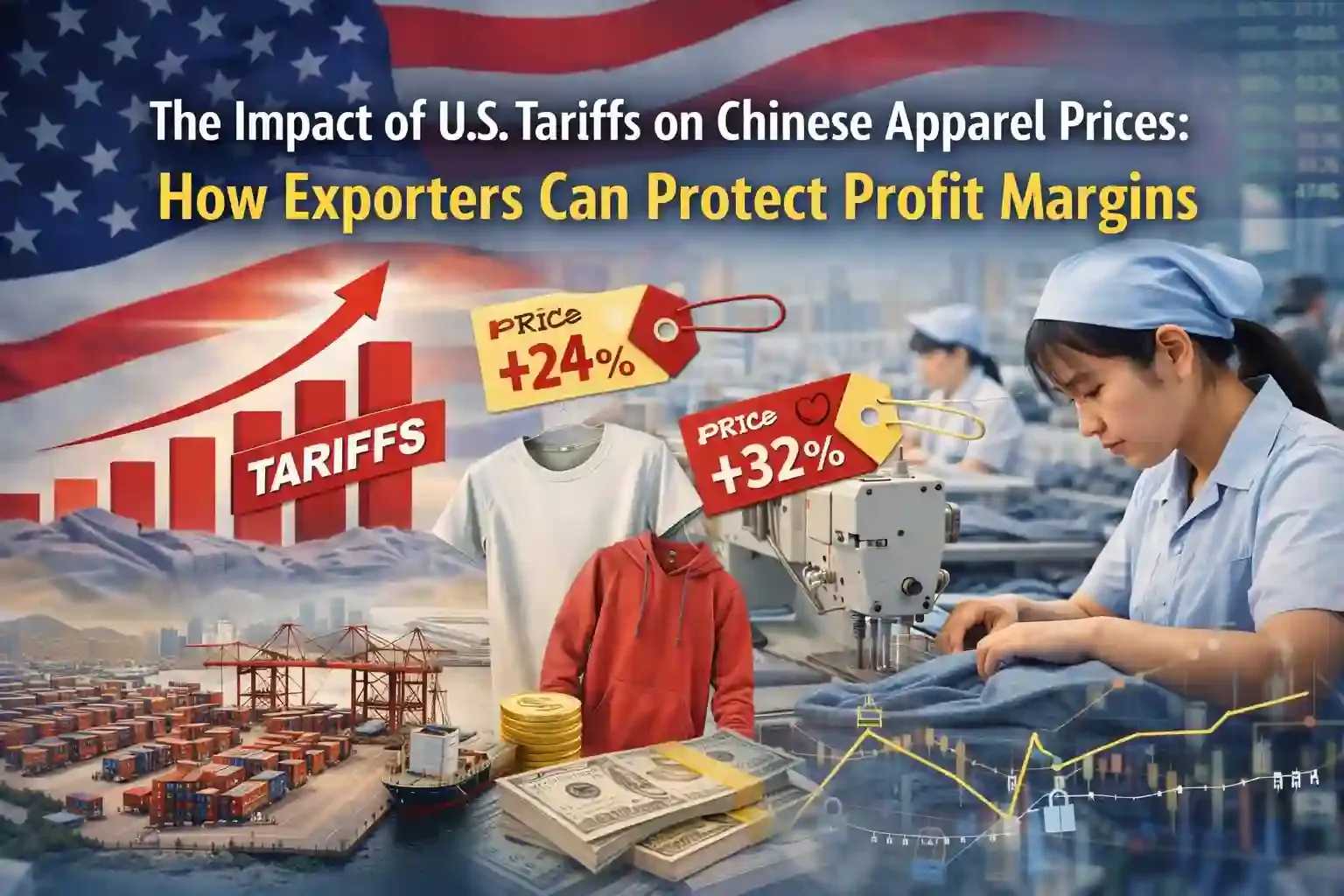
- A cotton T-shirt imported from China typically faces around 16.5% base duty plus additional tariffs, bringing the total tariff to roughly 24%.
- Polyester hoodies can face duties as high as 32% depending on classification.
In recent years, multiple tariff layers have significantly increased the overall cost burden. Some imported apparel products from China have experienced effective tariff levels exceeding 40%–50% when various duties are combined.
These rising tariffs affect pricing across the entire supply chain:
- Manufacturing costs increase because exporters may need to reduce factory margins to remain competitive.
- Importers face higher landed costs, which directly affect wholesale pricing.
- Retail prices may rise, especially when companies cannot fully absorb the tariff burden.
According to industry reports, the average tariff on apparel and footwear imported into the United States increased from around 13% historically to as high as 54% during the peak of tariff escalation in 2025, dramatically affecting sourcing decisions.
As tariffs rise, pricing pressure spreads across manufacturers, importers, and retailers.
Passing Costs Without Losing Market Share
One of the biggest challenges for Chinese exporters is passing tariff-related costs to buyers without losing orders.
Data from U.S. apparel import trends shows that price adjustments must be handled carefully. Between April and July 2025, the average import price of apparel in the U.S. increased by about 3%, reflecting partial cost transfer from tariffs.
However, retail clothing prices did not rise at the same rate because fashion brands were cautious about increasing prices during periods of weak consumer spending.
As a result, exporters often have to share part of the tariff burden with buyers.
Common strategies include:
Negotiating Cost Sharing with Buyers
Many U.S. brands negotiate with suppliers to split the tariff cost. Instead of raising prices immediately, exporters may offer:
- partial price reductions
- volume discounts
- longer-term contracts
These strategies help maintain order stability while distributing the cost increase across the supply chain.
Adjusting Product Mix
Another strategy is shifting production toward higher-value garments where tariffs represent a smaller percentage of the final retail price.
For example, premium fashion items, sportswear, and specialized garments often have larger margins than basic items like T-shirts. This allows exporters to absorb tariffs without severely affecting profitability.
Strategies to Improve Pricing Flexibility and Profit Margins
To maintain profitability under high tariffs, Chinese apparel exporters must improve pricing flexibility and strengthen cost control.
Supply Chain Optimization
Many exporters have adopted a “China plus one” strategy, moving part of their production to Southeast Asia or other regions while maintaining core manufacturing operations in China.
This strategy allows companies to:
- reduce tariff exposure
- maintain production capacity
- remain competitive with global sourcing trends
The shift is already visible in trade statistics. China’s share of U.S. apparel imports has fallen significantly over the past decade as brands diversify sourcing locations.
Increasing Product Value
Improving product value can help offset tariff costs. Exporters increasingly focus on:
- functional fabrics
- sustainable materials
- design innovation
- customized production
Higher-value products allow exporters to charge higher prices while maintaining strong customer demand.
Strengthening Direct Relationships with Brands
Building long-term relationships with global apparel brands can also stabilize pricing.
Many brands prefer reliable suppliers who can provide consistent quality, flexible production, and stable delivery schedules. These partnerships often lead to longer contracts and more predictable pricing structures, helping exporters manage tariff risks.
Conclusion
U.S. tariffs have significantly increased the cost of exporting apparel from China, forcing exporters to rethink their pricing strategies and cost management practices. With tariffs on some apparel products exceeding 30% or even higher under stacked duties, maintaining competitiveness requires careful planning and strategic pricing.
Chinese apparel exporters that successfully manage tariffs typically combine several approaches: optimizing supply chains, increasing product value, negotiating cost-sharing with buyers, and improving operational efficiency.
Although tariffs present significant challenges, companies that adopt flexible pricing strategies and focus on higher-value products will be better positioned to protect profit margins and remain competitive in the global apparel market.