Jun 26, 2026Industry Insights
U.S. Tariffs and the Transformation of the Global Apparel Supply Chain
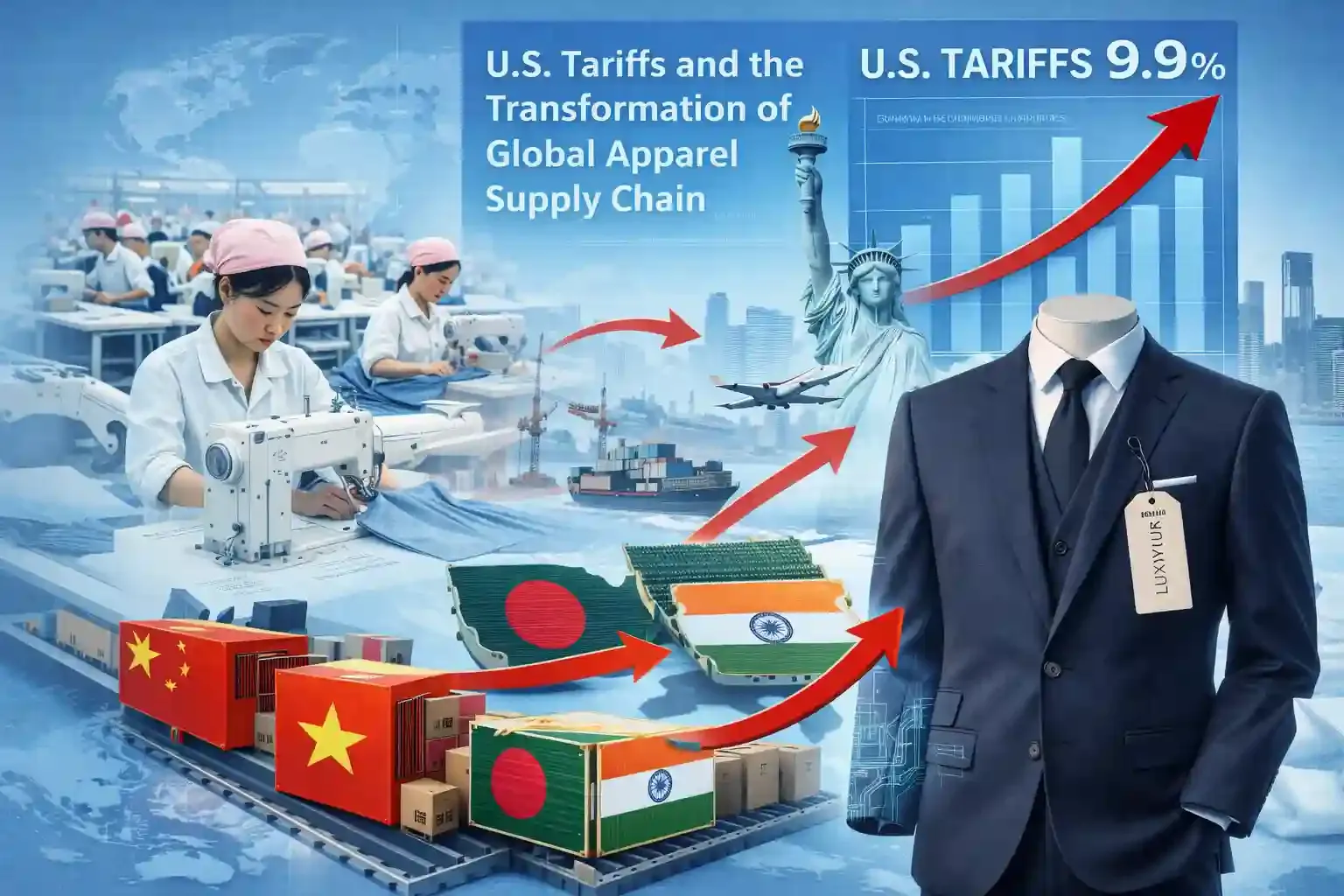
U.S. tariffs are shifting apparel sourcing from China to Vietnam, Bangladesh, and India, pushing Chinese exporters toward higher-value products and new markets.
Author & Source
Author: Connor Ma, International Trade Analyst with 10+ years of experience in global apparel exports and supply chain strategy
Reviewed by: SML Intimate Sourcing Team
Published by: SML Intimate Research Department
Introduction
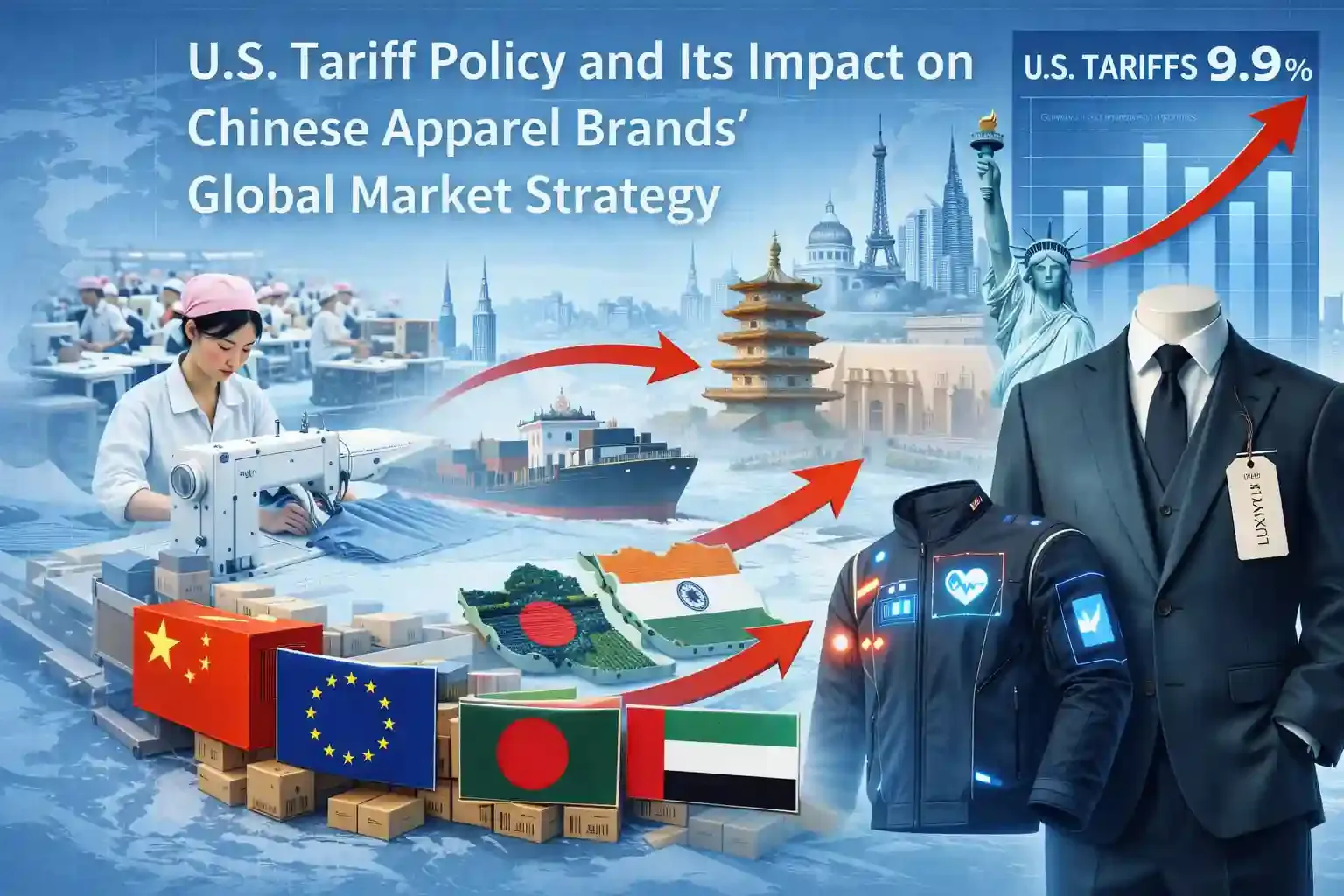
Since 2018, U.S. tariff policies on Chinese imports have significantly reshaped the global apparel supply chain. Based on trade data and sourcing trends, average tariffs on Chinese apparel entering the U.S. have reached approximately 9–10%, directly impacting pricing structures and sourcing decisions.
As a result, global brands and retailers are actively diversifying their supply chains to reduce tariff exposure. This shift has accelerated production relocation to alternative manufacturing hubs while pushing Chinese exporters to move up the value chain.
1. Tariffs Accelerating Supply Chain Diversification
The introduction of tariffs on Chinese goods has led to a structural shift in global sourcing strategies.
U.S. importers are increasingly:
- Reducing dependency on single-country sourcing
- Expanding supplier networks across multiple regions
- Prioritizing countries with favorable trade conditions
This has resulted in a more decentralized and diversified apparel supply chain.
According to global trade data, countries such as Vietnam, Bangladesh, and India have seen significant increases in apparel exports to the U.S., while China’s share has declined over the same period.
2. Key Beneficiaries of Production Shifts
2.1 Vietnam: Leveraging Trade Agreements and Efficiency
Vietnam has emerged as one of the largest beneficiaries of supply chain shifts.
Key advantages include:
- Participation in trade agreements such as the CPTPP
- Competitive labor costs
- Strong manufacturing capabilities
Recent data shows double-digit growth in Vietnam’s apparel exports to the U.S., supported by increasing foreign direct investment and capacity expansion.
2.2 Bangladesh: Cost Competitiveness at Scale
Bangladesh continues to attract global buyers due to its:
- Low labor costs
- Large-scale production capacity
- Established textile infrastructure
Apparel exports from Bangladesh to the U.S. have grown steadily, driven by brands seeking cost-efficient alternatives to China.
2.3 India: Diversification and Sustainability Advantage
India is strengthening its position through:
- A large and integrated textile supply chain
- Government support initiatives such as “Make in India”
- Increasing focus on sustainable and eco-friendly production
India’s growth is particularly notable in segments requiring diverse fabric capabilities and sustainability compliance.
3. Challenges Facing Chinese Apparel Exporters
Despite maintaining strong manufacturing capabilities, China faces increasing pressure in the global market.
3.1 Rising Cost Pressure
Tariffs, combined with increasing labor and compliance costs, have reduced China’s price competitiveness in basic apparel categories.
3.2 Declining Market Share in the U.S.
China’s share of U.S. apparel imports has declined significantly in recent years as buyers shift sourcing to alternative countries.
This trend reflects not only tariff impacts but also broader risk diversification strategies among global brands.
4. Strategic Opportunities for Chinese Exporters
While tariffs present challenges, they also accelerate industry upgrading.
4.1 Moving Up the Value Chain
Chinese manufacturers are increasingly focusing on:
- High-value garments
- Functional and performance fabrics
- Premium basics and technical apparel
This shift allows exporters to reduce sensitivity to price competition and tariffs.
4.2 Expanding into New Markets
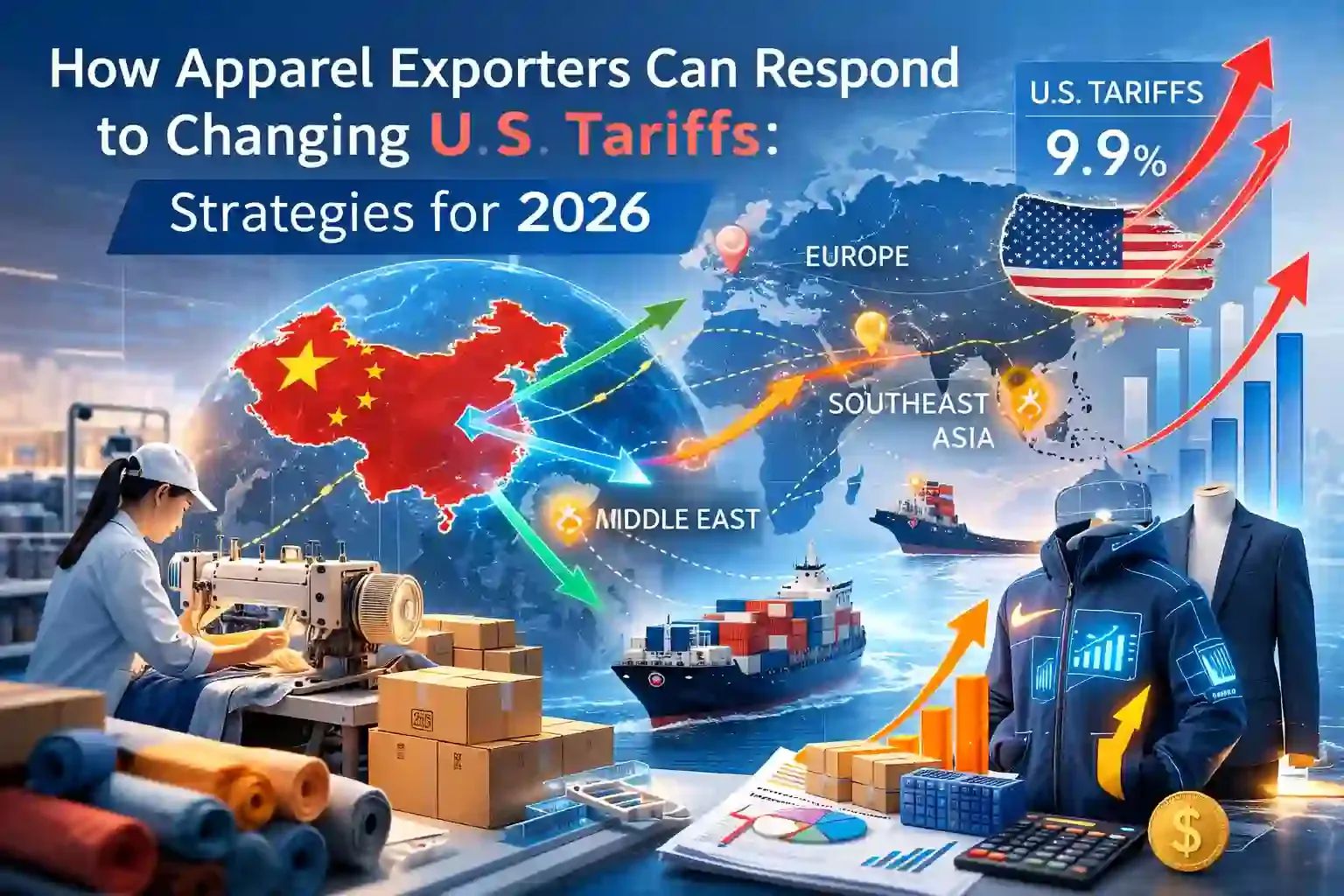
To reduce reliance on the U.S., Chinese exporters are expanding into:
- Europe
- Southeast Asia
- Middle East
- Africa
These regions offer:
- Lower trade barriers
- Growing middle-class demand
- Opportunities for premium product positioning
4.3 Strengthening Supply Chain Capabilities
China continues to maintain advantages in:
- Integrated supply chains
- Advanced manufacturing technology
- Speed and scalability
These strengths remain critical for global brands requiring reliable, high-quality production at scale.
Conclusion
U.S. tariffs have fundamentally reshaped the global apparel supply chain, accelerating diversification and shifting production to emerging markets such as Vietnam, Bangladesh, and India.
However, China remains a key player by adapting to these changes. By focusing on higher-value products, market diversification, and supply chain efficiency, Chinese apparel exporters can maintain competitiveness in an increasingly complex global trade environment.
For international buyers, the future of sourcing is no longer about choosing a single country—but about building resilient, multi-country supply chains.
References
- Office of the United States Trade Representative (USTR). Section 301 Tariff Reports and Trade Data
- World Bank. Global Trade and Textile Export Data 2025
- McKinsey & Company. The State of Fashion 2024–2025
- Euromonitor International. Global Apparel Market Outlook 2025
- UN Comtrade Database. International Apparel Trade Statistics