Jun 26, 2026Industry Insights
How the Middle East Crisis Impacts Chinese Apparel Supply Chains in 2026
Analyze how Middle East conflicts, including the Strait of Hormuz crisis, affect Chinese apparel exporters, shipping delays, and supply chain costs in 2026.
Introduction
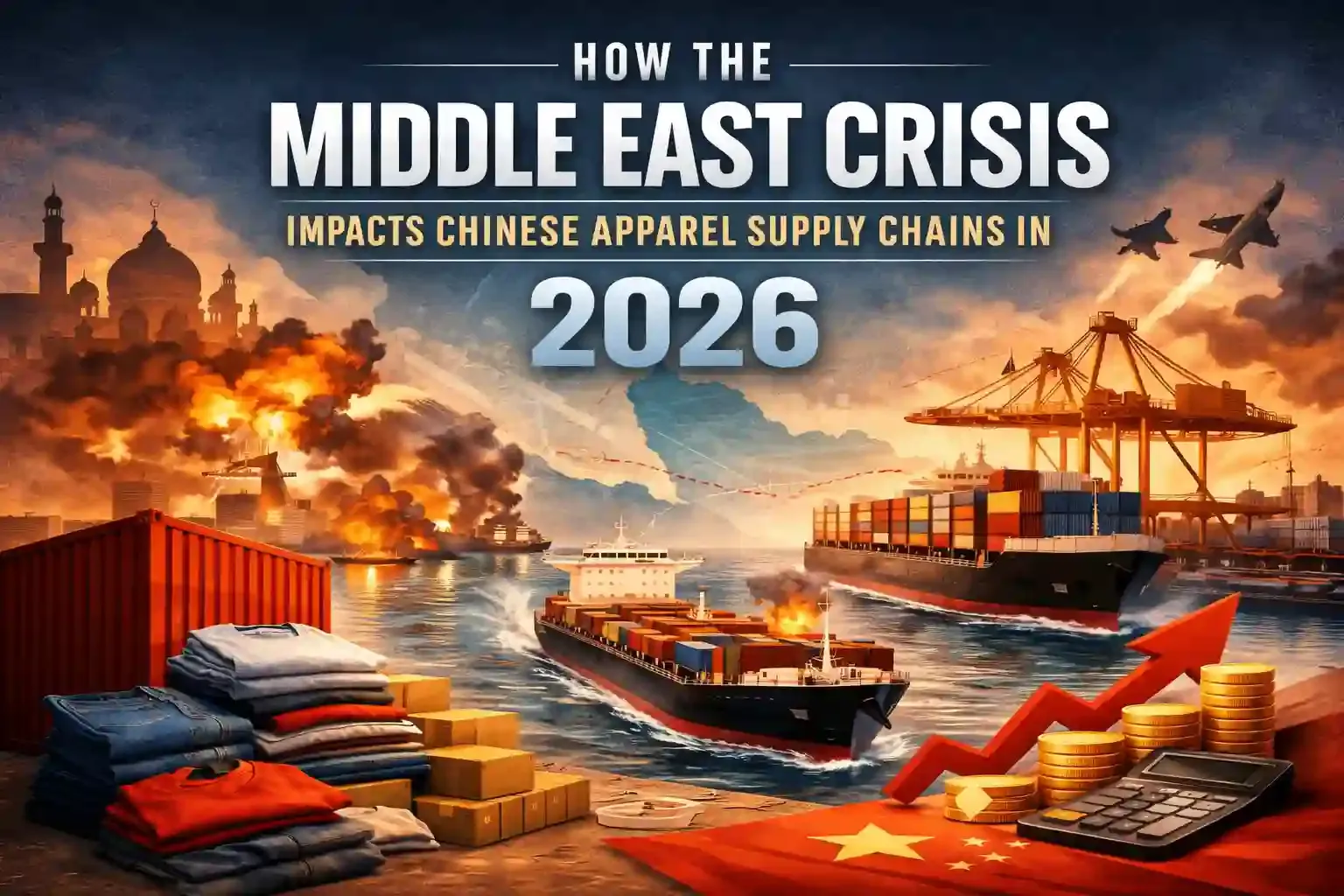
In 2026, the escalating Iran-Israel conflict has drawn global attention due to its potential impact on international trade. For Chinese apparel exporters, the crisis centers around the Strait of Hormuz—a critical shipping chokepoint through which nearly 20% of global oil exports pass daily. This article explores how the Middle East crisis directly affects supply chains, shipping costs, and order fulfillment for B2B apparel businesses.
Strait of Hormuz – A Critical Bottleneck
- Nearly 20 million barrels of oil pass daily through this narrow corridor.
- Conflict-induced disruptions have caused shipping delays of up to 40% for vessels passing the Gulf.
- War risk zones increase insurance costs and make some carriers reluctant to operate.
Impact on Chinese Apparel Exporters
- Shipping Delays – Ports in UAE and Saudi Arabia are experiencing congestion, delaying container shipments by 10–15 days.
- Rising Costs – Fuel surcharges (BAF) have increased 30–40% since early 2026.
- Order Adjustments – Middle East buyers are requesting partial shipments or alternative routes.
Case Study – Knitwear Exporter Example
Company: a Chinese apparel exporter
Products: T-shirts, hoodies, loungewear
Markets: US, EU, Middle East
- Challenge: Middle East orders delayed due to port congestion.
- Action: Negotiated alternative routes via Singapore; locked quarterly freight rates.
Mitigation Strategies
- Diversify markets beyond the Middle East (Japan, Australia, Southeast Asia).
- Shorten production cycles to respond faster to order changes.
- Maintain transparent communication with B2B clients.
Conclusion
Chinese apparel exporters must proactively adapt to Middle East conflicts by managing shipping costs, exploring alternative routes, and optimizing order cycles. Strategic planning ensures supply chain resilience even in volatile geopolitical times.