Sep 21, 2026Manufacturing & Quality
Inside a Knitwear Factory: Step-by-Step Production Overview
Step-by-step knitwear factory process, from fabric inspection to final shipment, helping brands understand production, improve quality control, and ensure reliable delivery timelines.
Author & Source
Author: Connor Ma, International Trade Analyst with 10+ years of experience in knitwear manufacturing and global apparel supply chains
Reviewed by: SML Intimate Production & QC Team
Published by: SML Intimate Manufacturing Insights
Introduction
Understanding how a knitwear factory operates is essential for brands sourcing apparel globally. From fabric inspection to final shipment, every stage in the production process directly affects garment quality, consistency, and delivery timelines.
Based on real factory operations and quality control practices, this guide provides a step-by-step overview of knitwear manufacturing inside a professional production facility.
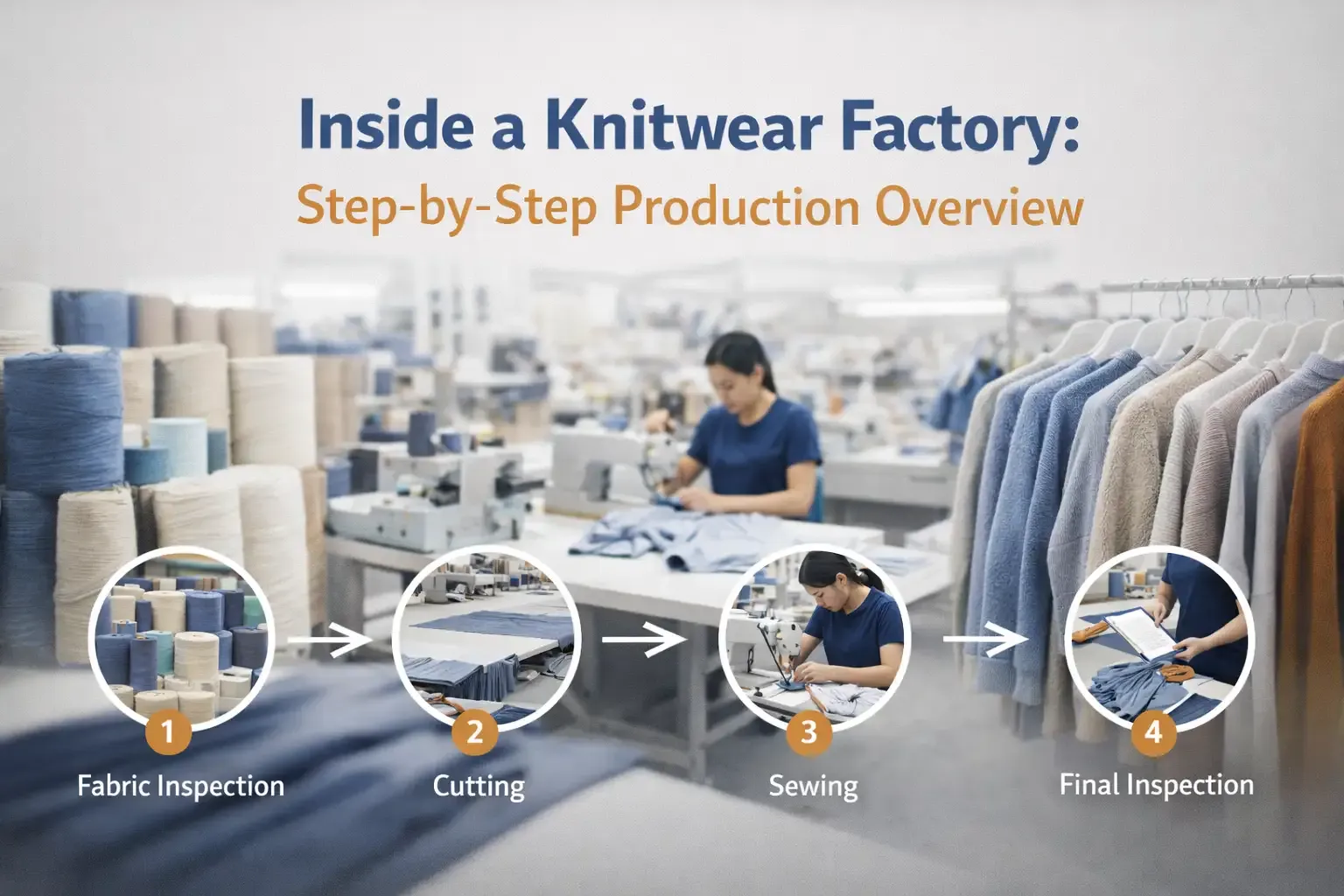
Step 1: Fabric Inspection & Testing
Production begins with strict raw material inspection.
Key checks include:
- Fabric weight (GSM)
- Composition accuracy
- Color consistency
- Shrinkage rate
- Surface defects
For knit fabrics, shrinkage testing is particularly critical before bulk cutting to avoid size inconsistencies after washing.
Working with an experienced custom knitwear manufacturer ensures proper fabric testing and quality control at the earliest stage.
Step 2: Pattern Preparation & Marker Making
After sample approval, production preparation begins.
Key processes:
- Pattern grading across all sizes
- Marker creation to optimize fabric usage
- Fabric consumption calculation per garment
Efficient marker planning helps reduce fabric waste and control production costs.
Step 3: Fabric Cutting
Before cutting, fabric must be properly prepared.
Key steps:
- Fabric relaxation (essential for knit materials)
- Layering based on order quantity
- Precision cutting using industrial machines
Accuracy in cutting ensures consistency across all units in bulk production.
Step 4: Sewing Line Assembly
Garments are assembled through a structured production line.
Typical operations include:
- Shoulder joining
- Sleeve attachment
- Side seam overlocking
- Rib collar and cuff attachment
- Double-needle hemming
Each operator focuses on a specific process, improving efficiency and maintaining consistent quality. A reliable OEM apparel manufacturer will standardize these operations to reduce errors.
Step 5: In-Line Quality Control
Quality control is implemented throughout production, not just at the end.
Inspectors check:
- Stitch density
- Seam strength
- Measurement accuracy
- Overall construction consistency
Early-stage inspection helps prevent large-scale defects and reduces rework costs.
Step 6: Washing & Finishing
Depending on product requirements, garments may undergo finishing processes such as:
- Enzyme washing
- Garment dyeing
- Brushing or fleece finishing
After washing:
- Garments are dried
- Pressed or steamed
- Thread-trimmed
These processes ensure proper hand feel, shrinkage control, and final appearance.
Step 7: Final Inspection
Before packaging, garments go through final quality checks.
Includes:
- Random AQL inspections
- Measurement verification
- Visual appearance checks
Only approved products proceed to packing, ensuring consistency and compliance with buyer requirements.
Step 8: Packing & Shipment
The final stage prepares goods for delivery.
Processes include:
- Folding based on brand standards
- Applying labels and hang tags
- Carton packing
- Export documentation preparation
Lead time depends on order size, product complexity, and logistics arrangements.
Why Understanding the Production Process Matters
Brands that understand factory workflows gain significant advantages:
- More accurate production planning
- Better communication with suppliers
- Reduced errors and delays
- Stronger long-term partnerships
Transparency in manufacturing builds trust and improves collaboration.
Conclusion
Knitwear manufacturing is a structured, multi-stage process requiring coordination across sourcing, production, and quality control teams.
From fabric inspection to final shipment, every step plays a critical role in ensuring product quality and brand reputation.
Choosing a factory with standardized processes and strong quality management systems ensures consistent results and reliable delivery.
Get a Quote
Looking for a reliable partner for knitwear production?
Contact us today to work with an experienced custom clothing manufacturer for sampling, bulk production, and global shipping support.
References
- McKinsey & Company. The State of Fashion 2025
- Textile Exchange. Preferred Fiber Market Report 2025
- SML Intimate Internal Production Workflow Data, 2025
- World Bank. Global Manufacturing and Supply Chain Report 2025
Buyer Inputs and Approval Gates
Confirm buyer inputs — tech pack or specification, size chart, color standard, and quantity — and name the approval gates: sample approval, PP sample approval, and bulk production approval. Agree tolerances and inspection points, and define what happens if a batch fails acceptance.
See Our Floor for Yourself
We welcome buyer verification. Book a live video walk-through of our production floor at a time that suits you — real machines, real orders, no rehearsed tour. Our office is in Yiwu, Zhejiang and our factory is in Zhuji, Zhejiang.
Browse the factory tour and how we work pages, or request a quote and ask us anything before you commit.