Jun 26, 2026Industry Insights
How Chinese Apparel Exporters Can Improve Competitiveness Under U.S. Tariffs
Learn how Chinese apparel exporters can overcome U.S. tariff challenges by enhancing product value, focusing on design innovation, customization, and brand differentiation.
Author & Source
Author: Connor Ma, International Trade Analyst with 10+ years of experience in global apparel exports and supply chain strategy
Reviewed by: SML Intimate Sourcing Team
Published by: SML Intimate Research Department
Introduction
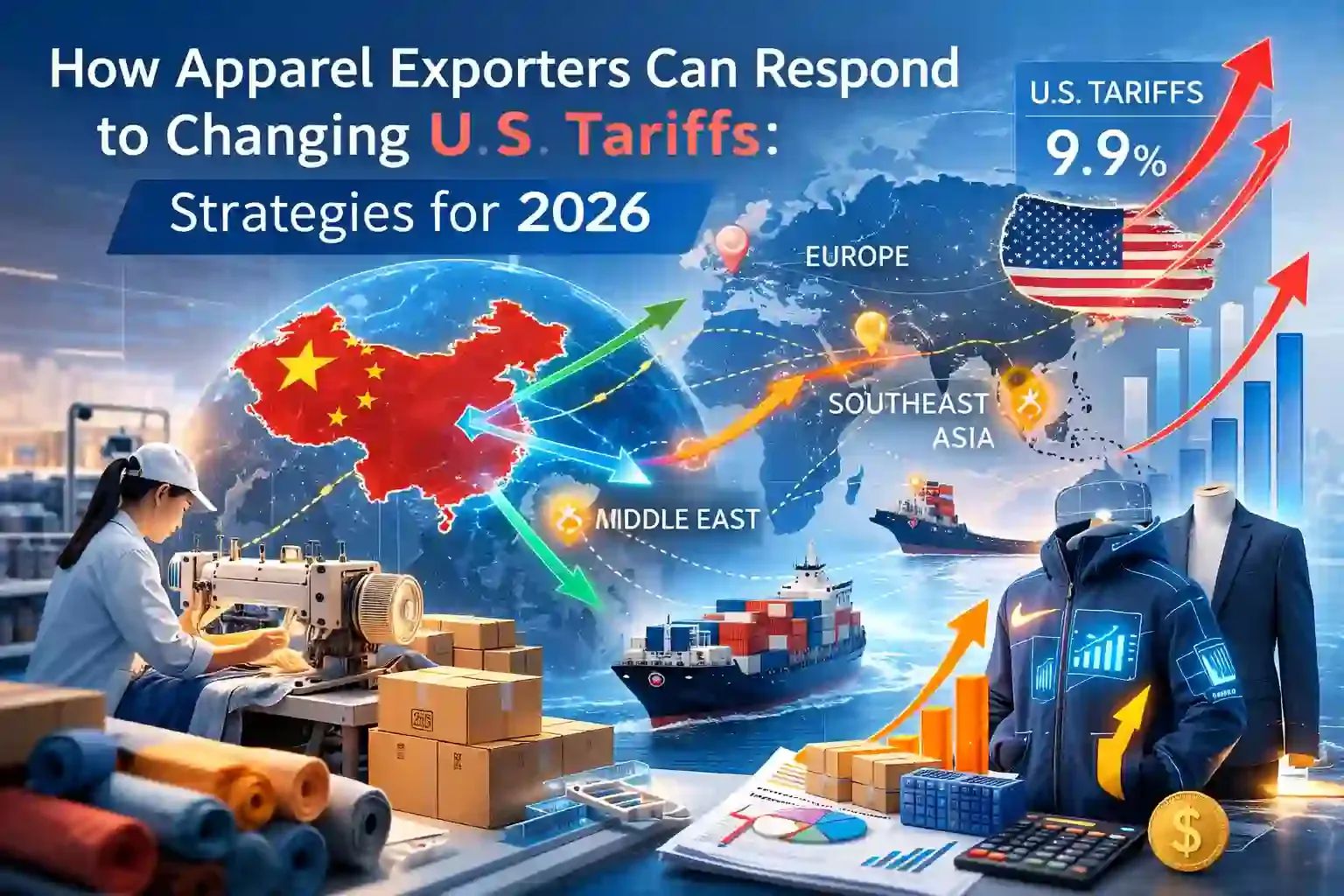
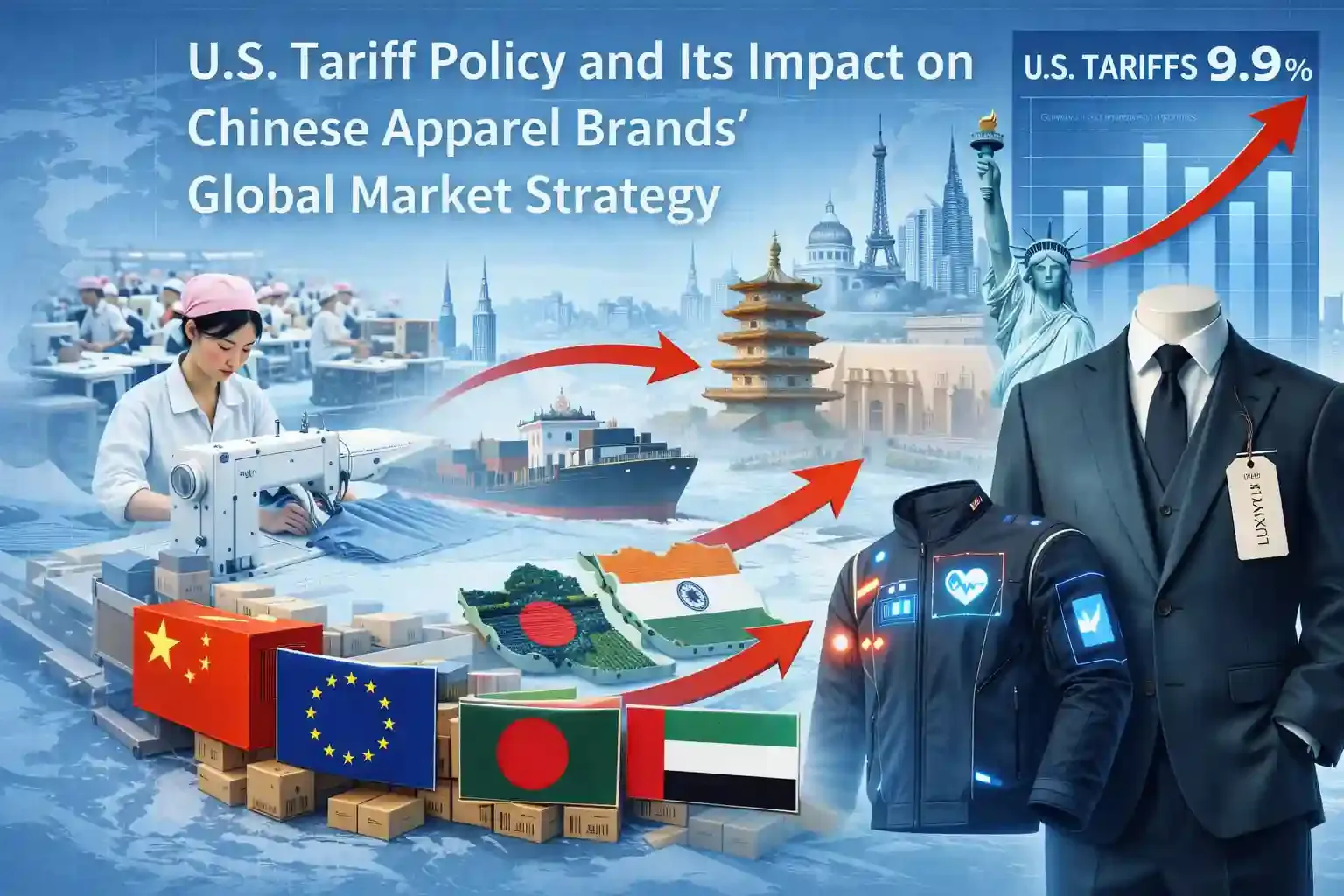
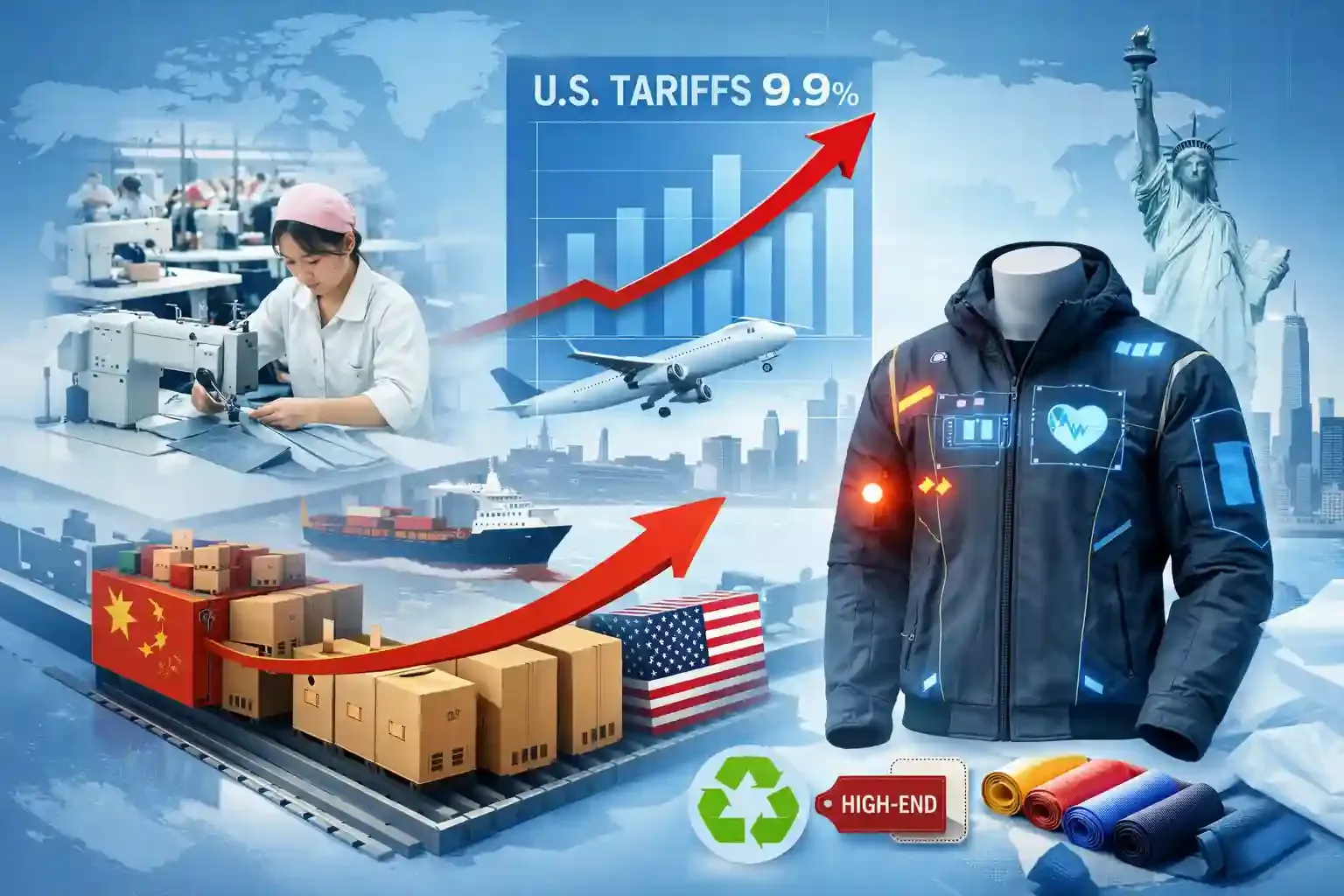
The continued impact of U.S. tariffs on Chinese apparel exports has significantly reshaped global sourcing strategies. According to industry data, average tariff rates on apparel imports from China have approached 9–10% in recent years, placing direct pressure on pricing and profit margins.
Based on practical export experience and B2B buyer behavior, competing on price alone is no longer sustainable. Instead, Chinese apparel exporters must shift toward value-driven strategies, including product innovation, design differentiation, and brand development.
This article explores how manufacturers and suppliers can enhance competitiveness by moving up the value chain.
1. Enhancing Product Value Through Technology and Innovation
1.1 Functional Fabrics and Smart Apparel
One of the most effective ways to offset tariff pressure is to increase the technical value of products.
Chinese manufacturers are increasingly integrating:
- Moisture-wicking and breathable fabrics
- Anti-bacterial and odor-resistant finishes
- UV-protection textiles
These features are especially востребованы in activewear, loungewear, and everyday essentials, where performance is becoming a key selling point.
In addition, the global wearable technology market continues to expand, with applications such as:
- Temperature-regulating garments
- Smart textiles with embedded sensors
According to market research, the wearable technology segment in apparel is experiencing strong growth, driven by consumer demand for functionality and comfort.
👉 From a B2B perspective, these innovations allow suppliers to justify higher unit prices and differentiate from low-cost competitors.
1.2 Sustainable Materials and Production
Sustainability has become a critical factor in international sourcing decisions.
Chinese apparel exporters are increasingly adopting:
- Organic and recycled fibers
- Water-saving dyeing technologies
- Energy-efficient production processes
According to industry reports, a significant share of manufacturers in China have already integrated sustainability into their operations.
For buyers in the U.S. and Europe, sustainable products are no longer optional—they are often a requirement.
This shift enables suppliers to:
- Access premium markets
- Improve brand perception
- Command higher pricing
2. Moving Toward High-Margin Segments
2.1 Customization and Personalization
As tariffs compress margins in mass-market segments, customization provides a clear path to higher profitability.
More exporters are offering:
- Custom sizing and fit adjustments
- Private label and OEM/ODM services
- Limited-edition or niche designs
Market data shows steady growth in demand for personalized apparel, particularly among younger consumers and niche brands.
From a business perspective, customization helps:
- Reduce direct price competition
- Increase order value
- Strengthen client relationships
2.2 Development of Premium and High-End Product Lines
Another key strategy is moving into mid-to-high-end product segments.
Compared to basic low-cost apparel, premium products offer:
- Higher margins
- Lower sensitivity to tariffs
- Stronger brand positioning
In recent years, Chinese brands have made notable progress in developing higher-end collections, targeting both domestic consumers and international markets.
This transition reflects a broader industry trend:
👉 from “Made in China” to “Designed and Branded in China.”
3. Brand Differentiation and Market Diversification
3.1 Building Strong Brand Identity
Branding is becoming a critical competitive factor in the global apparel industry.
Chinese apparel companies are increasingly investing in:
- Digital marketing and social media presence
- Collaboration with designers and influencers
- Participation in international trade shows and fashion events
A strong brand allows companies to:
- Command premium pricing
- Build long-term customer loyalty
- Reduce reliance on price-based competition
3.2 Expanding into Emerging High-Value Markets
To reduce dependence on tariff-affected markets, exporters are actively exploring new regions, including:
- Southeast Asia
- Middle East
- Latin America
- Africa
These markets are experiencing:
- Rapid middle-class growth
- Increasing demand for quality apparel
- Rising acceptance of premium products
Diversification not only reduces risk but also opens up new growth opportunities beyond traditional Western markets.
Conclusion
U.S. tariffs have created significant challenges for Chinese apparel exporters, but they have also accelerated a necessary industry transformation.
Competing on price is no longer sufficient. Instead, long-term competitiveness depends on:
- Product innovation
- Sustainable production
- Brand differentiation
- Market diversification
Exporters that successfully transition from cost-driven manufacturing to value-driven supply will not only withstand tariff pressures but also achieve sustainable growth in the global apparel market.
References
- Office of the United States Trade Representative (USTR). Section 301 Tariff Overview and Trade Data
- McKinsey & Company. The State of Fashion 2024–2025
- Statista. Wearable Technology Market Revenue Worldwide 2025–2026
- Euromonitor International. Global Apparel Market and Emerging Markets Outlook 2025
- China Ministry of Commerce (MOFCOM). China Apparel Industry Development Report 2025
- Textile Exchange. Sustainable Materials Market Report 2024